Entry 1: Kogashi Festival 2026
— The Festival I Saw for the First Time in 30 Years, and an Atami That Keeps Changing —
The moment I heard the drums, it felt as though time rewound.
For the first time in over thirty years, I went to see the Kogashi Festival in Atami. The rhythm that reached my ears was one that had been etched into my body since childhood. I hadn't heard it even once in all those decades, yet the sound of the taiko drums and flutes had remained perfectly intact somewhere deep in my memory.
As a young child, I practiced drumming side by side with the other kids from the neighborhood. Their faces surfaced in my mind, drawn up by the sound. It was a strange feeling — something between the urge to cry and a wave of nostalgia.
The Crowds That Once Filled the Seaside Boulevard
When I was a child, the Kogashi Festival was the kind of celebration that made the whole town tremble.
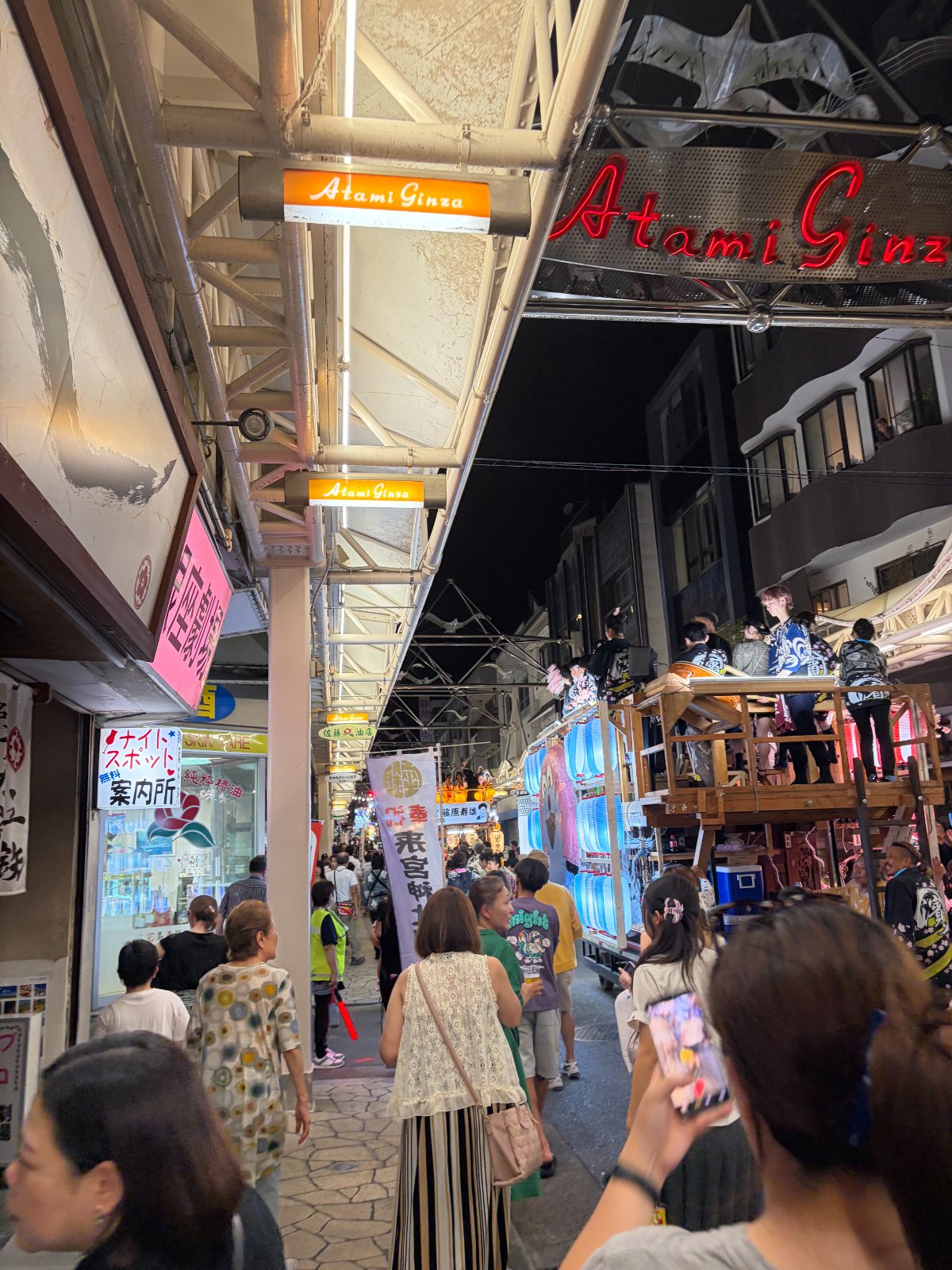
Food stalls stretched in a long row along National Route 135, right in front of Sun Beach. Candy apples, yakisoba, goldfish scooping. The seaside boulevard was so packed with people you had to push your way through just to move forward. The smell of the ocean, the smoke from the stalls, the warmth of the crowd all mingled together in the summer night. That was what summer in Atami looked like.
This year, I walked along Route 135 for the first time in ages. There were fewer stalls. The long row of vendors that used to line the stretch in front of Sun Beach had shrunk considerably. According to a local I spoke with at a snack bar, regulations on where stalls could be set up were introduced around the time COVID was spreading — and those restrictions are apparently still in place. The old bustle hadn't come back.
Fewer Floats Than Before
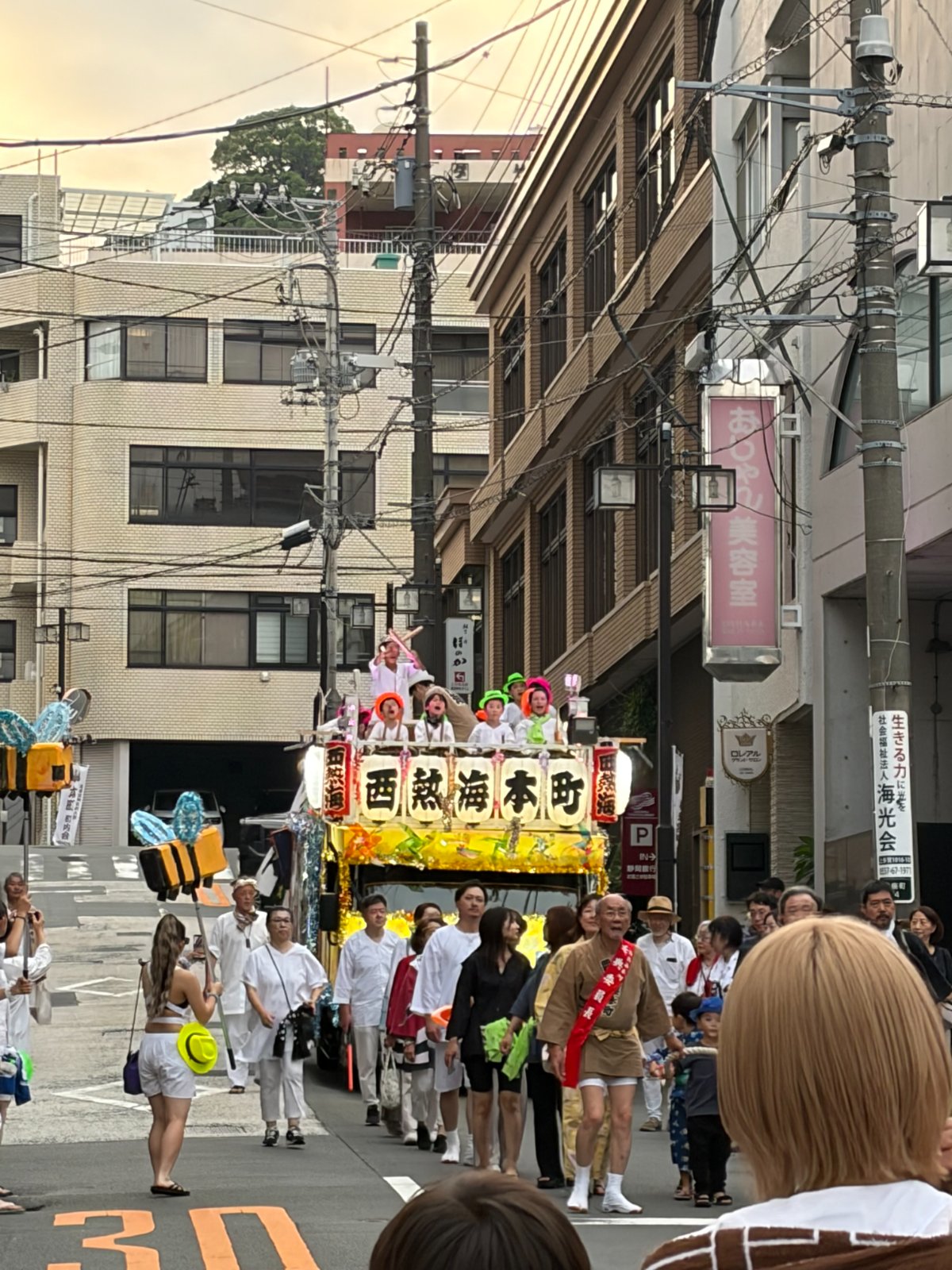
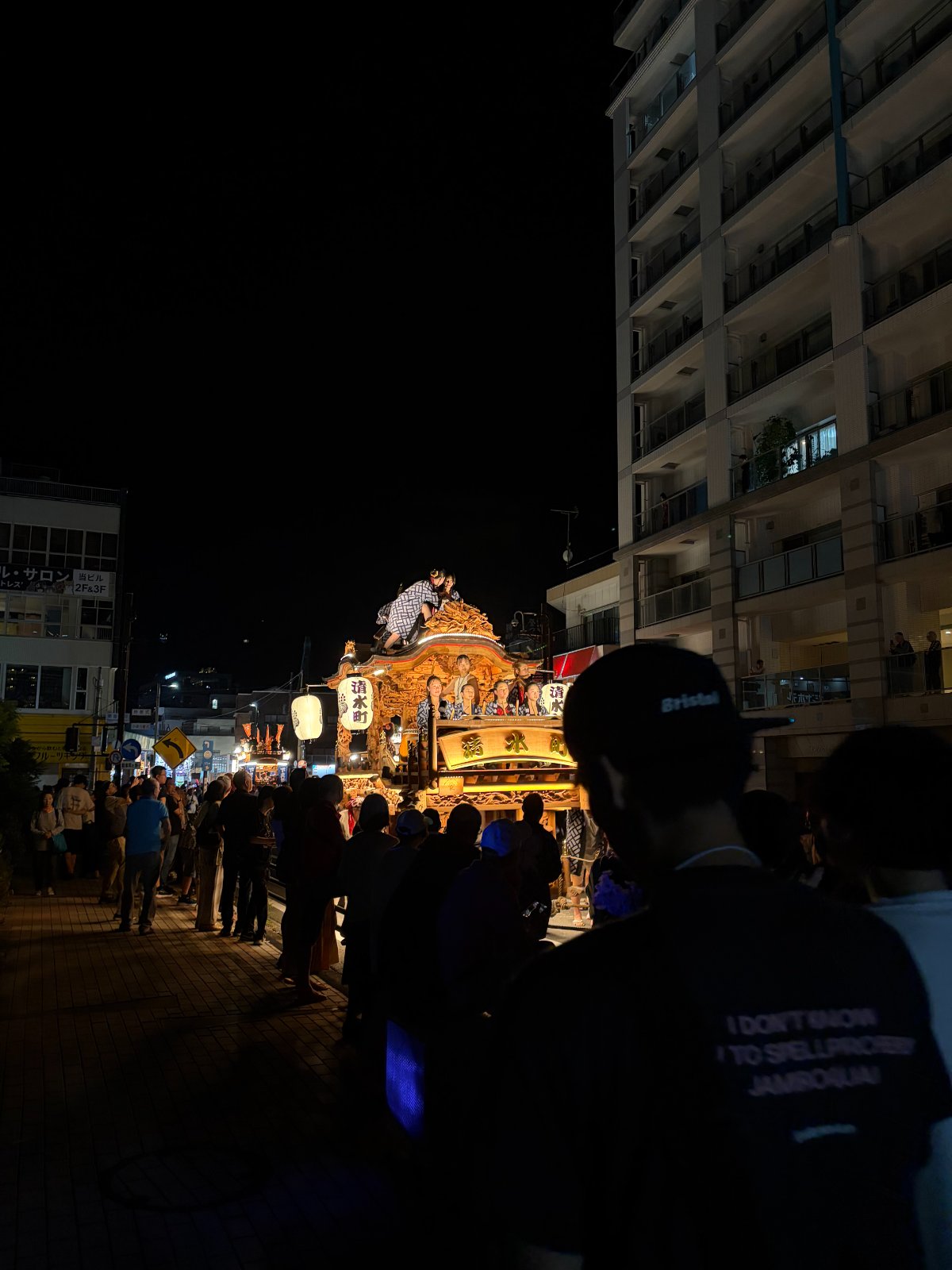
The Kogashi Festival is known for the elaborately crafted floats that each neighborhood parades through the streets. This year, 19 neighborhoods — including Onsen-dori and Yuraku-cho — put out their floats as usual. Onsen-dori went with a Studio Ghibli theme, while Yuraku-cho chose Dragon Quest; both were impressive handmade creations that radiated genuine passion.
But I heard that starting this year, the number of floats has dropped quite a bit. The reason is no mystery: there are fewer children.
In the weeks leading up to the festival, I had caught the sound of drum practice drifting through the air a few times. But the number of children playing was so small. The lively scene I remembered — neighborhoods full of kids gathering together to practice — has nearly disappeared.
A Ryokan Being Torn Down
Glancing toward the seaside boulevard, I spotted a crane in motion. A large inn that had stood there for years was being demolished right before my eyes.
It was a building I had known since childhood. I heard that most of the people who had been connected to that place are no longer in Atami. Yet some, apparently, have stayed. Someday I'd like to meet those people again and hear what they have to say — to listen to the Atami they remember and put it on record.
And Yet, the Festival Goes On
The number of floats has dwindled. The stalls are fewer. The inns are being torn down. And yet, the shouts were powerful. The rhythm of the drums hadn't changed. The people of the town pulled the floats, played the flutes, and raised their voices.
Standing there in the middle of that sound, loneliness and nostalgia became so tangled together that I couldn't quite find the words.
Atami has certainly changed. But the festival is still here. The people who love Atami are still here.
That much, at least, hasn't changed.