Part 2: The Town I Once Called Home
―Atami, 27 Years Later―
I grew up in a hot spring town.
My family ran a ryokan. At night, geisha and hostesses would arrive in great numbers,
and the laughter of tour groups would carry on late into the evening.
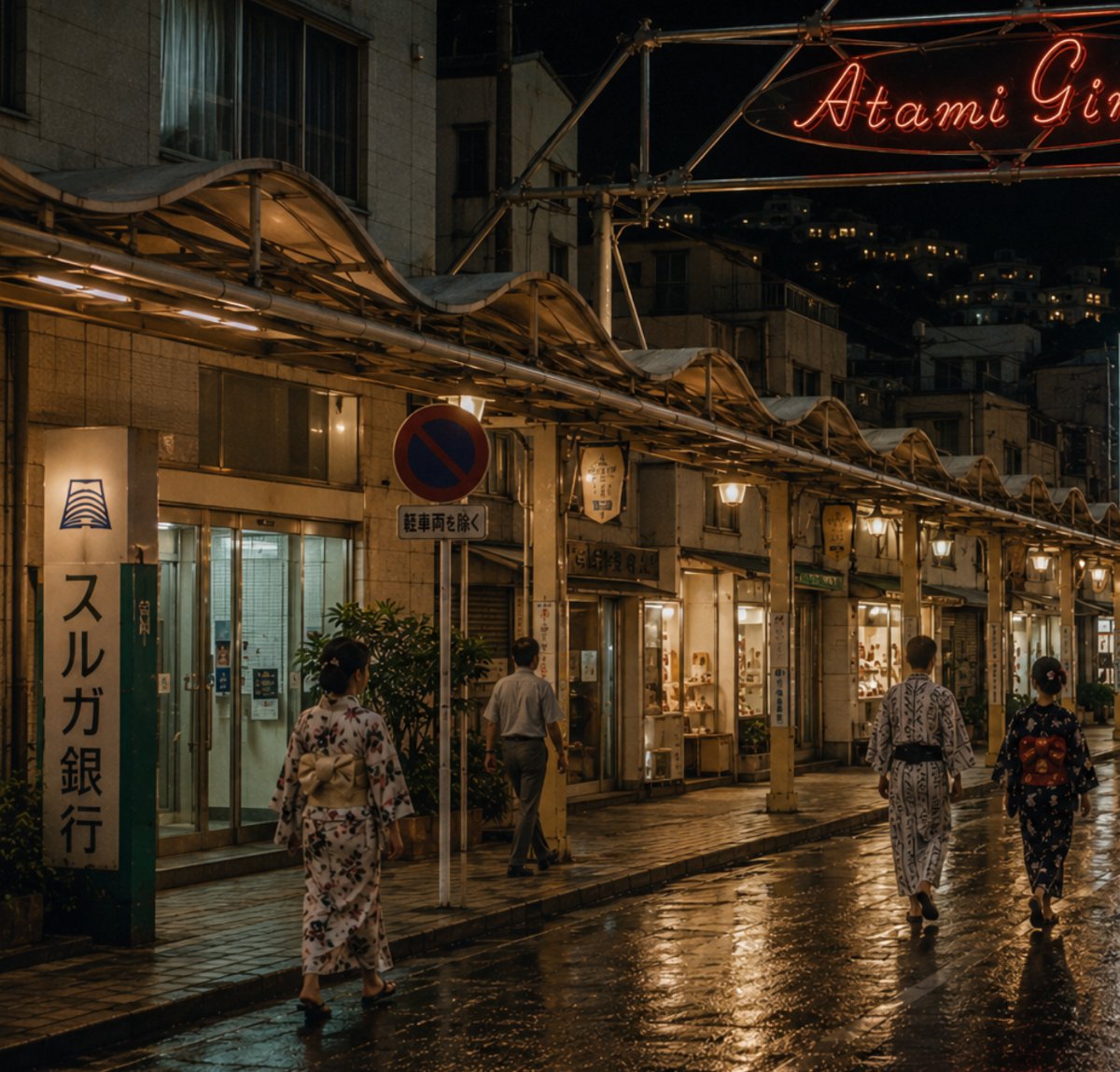
Tourists in yukata strolled through the streets, and steam from the hot springs drifted deep into the alleyways.
To me as a child, none of this seemed unusual.
It was simply everyday life in a town called Atami.
Once I started middle school, I began commuting to a school in Tokyo, and when I entered university, I moved there for good.
For the first few years, I went back to Atami during every long break,
but after I turned thirty, my family's ryokan closed its doors.
My family left Atami as well, and I no longer had a place to return to.
From then on, Atami became "the town I once used to live in."
Twenty-seven years passed quietly by.
In my late forties, something made me come across the name "Atami" again, quite by chance.
It was nothing more than that, but before I knew it, I had bought a shinkansen ticket.
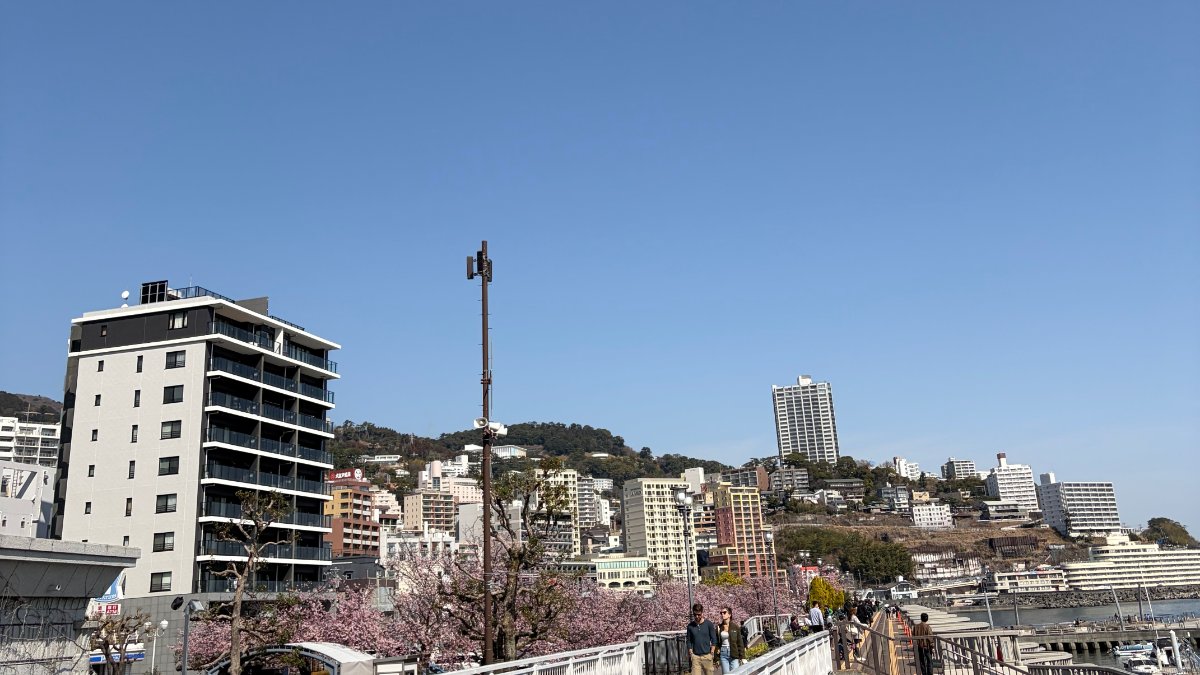
When I stepped out of the station, RUSCA stood there.
The area in front of the station was bustling with tourists buying souvenirs.
Even inside the shopping arcade, the crowds were thick—if anything, livelier than I remembered.
But as I walked past the arcade toward the Sakimi-cho area,
the number of people gradually thinned out.
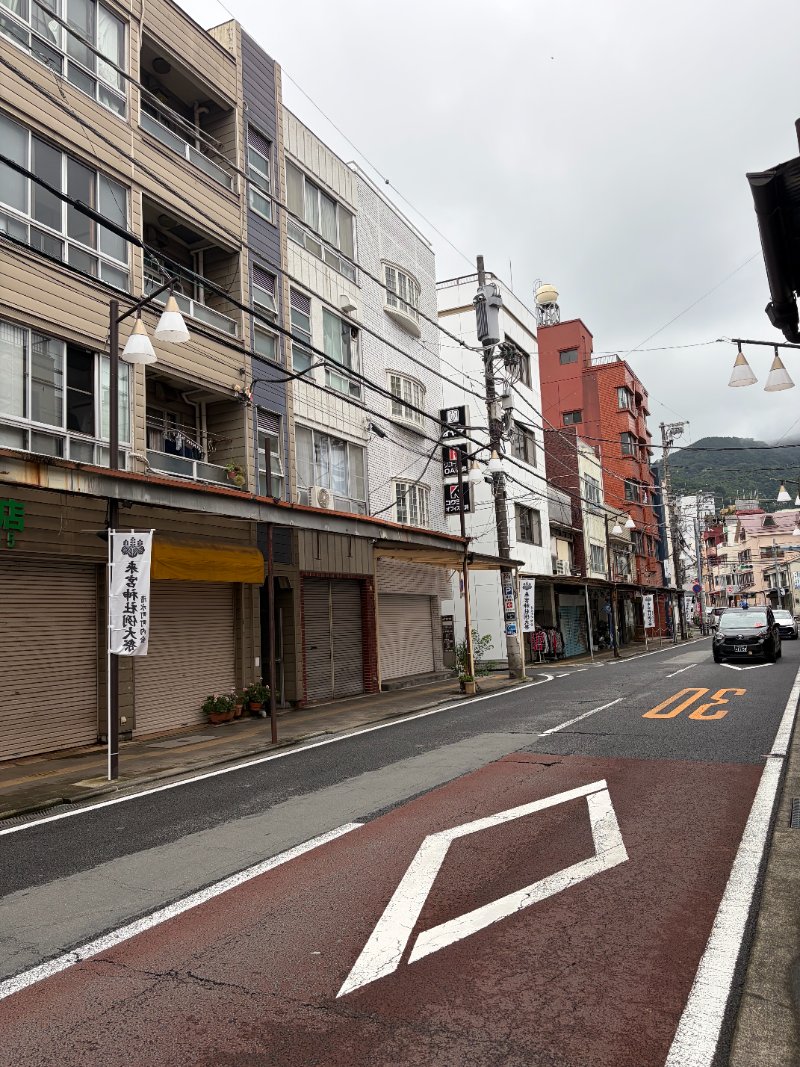
Shops with their shutters down began to catch my eye.
Back in the day, there had hardly been any shops like that.
Down near Atami Ginza, the crowds returned once more.
But past Higashi-Ginza, there was almost no one to be seen again.
Shimizu-cho, too, looked quite different from how I remembered it.
A town where bustling streets and silent ones
appear one after another, in turn.
A town that felt familiar, yet unfamiliar at the same time.
I think I'll write about this, little by little, from here on.
The story of a town that feels familiar, yet is no longer one I truly know.